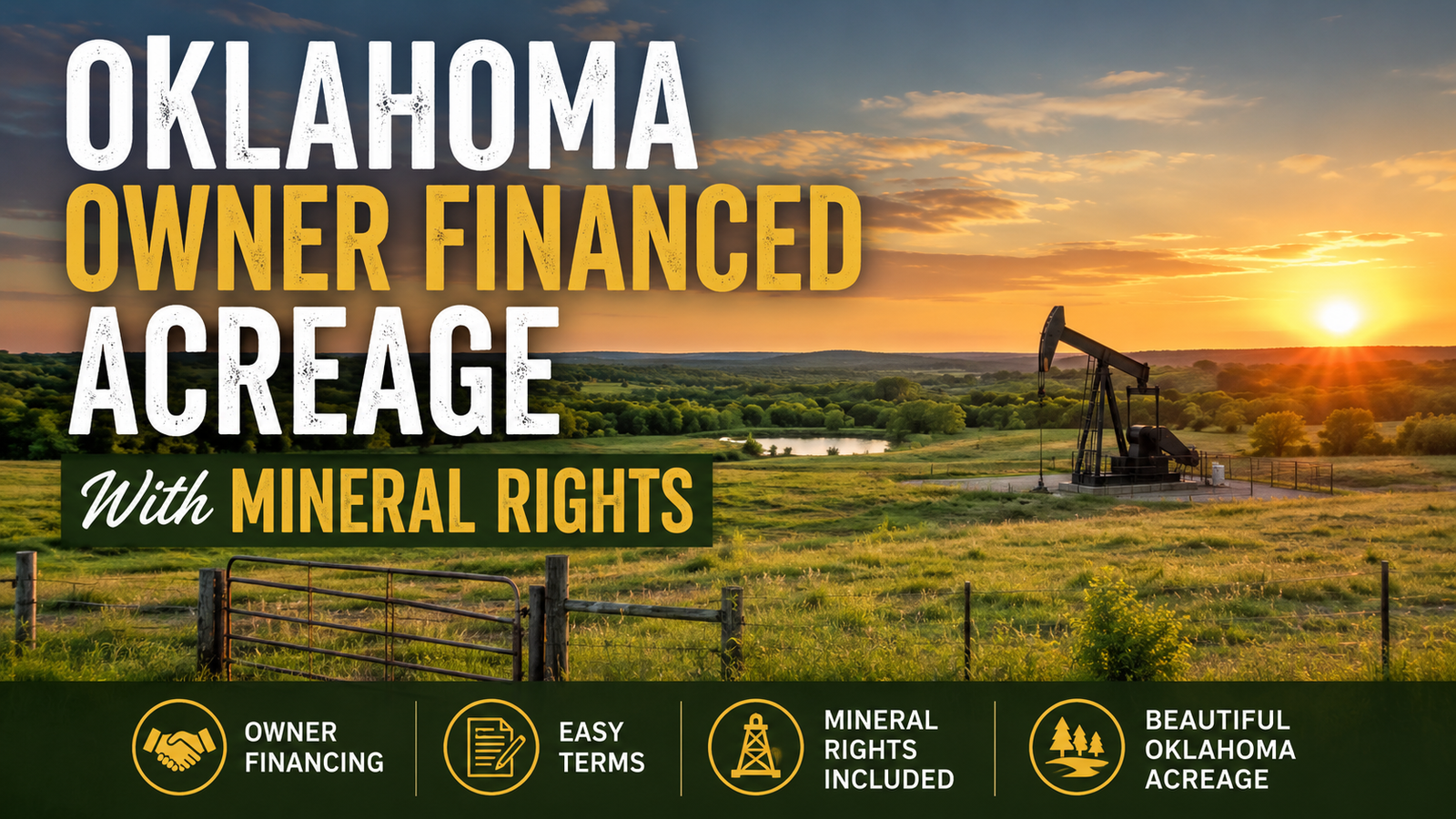
You’ve been scrolling land listings for months. Every decent parcel in Oklahoma seems priced for someone with a suitcase full of cash. Then you spot it: “Owner financed acreage with mineral rights – 40 acres in Osage County.” No bank approval needed. No 20% down. Just a handshake and a contract.
Feels like a shortcut. Sometimes it is. Sometimes it’s a trap.
I’ve watched buyers walk away with incredible deals on Oklahoma owner financed land. I’ve also watched people lose their down payment because they didn’t read the fine print on a mineral rights clause. Here’s what actually works, what doesn’t, and how to know which camp you’re in.
What “Owner Financed Acreage with Mineral Rights” Actually Means in Oklahoma
Let’s strip away the marketing language.
Owner financing means the seller acts as the bank. You make payments directly to them over an agreed period. When the final payment clears, you get the deed. No traditional lender, no credit check (usually), and no mortgage origination fees.
Mineral rights are a separate beast. In Oklahoma, surface rights (the dirt you walk on) and mineral rights (what’s underneath) can be split. The deed either transfers both or just the surface. When a seller offers “mineral rights included,” they’re promising to transfer their ownership of oil, gas, coal, and other underground resources to you.
Here’s the catch: in many Oklahoma counties, those mineral rights might already be severed. The seller can’t give you what they don’t own.
Key distinction: “Owner financed acreage with mineral rights” is not the same as “owner financed acreage that has never been severed.” Always pull the title chain before signing anything.
Why Sellers Choose Owner Financing in Oklahoma
Understanding the seller’s motivation changes how you negotiate.
Most Oklahoma landowners offering owner financing fall into three categories:
- Retired farmers or estate executors who own land outright and want steady monthly income without bank hassles. These sellers often hold clean titles and reasonable terms.
- Speculators who bought cheap, subdivided it, and want to offload fast. These sellers may offer high interest rates (8–12%) and balloon payments. Watch their mineral rights disclosures carefully—some strip the minerals before selling.
- Desperate sellers with problem properties—flood zones, restricted access, or disputed titles. Owner financing is their only exit.
I’ve seen legitimate sellers offer 6% interest over 10 years with 10% down. I’ve also seen sellers demand 15% down, 12% interest, and a five-year balloon on land that won’t perk. Know who you’re dealing with.
The Mineral Rights Question: What You’re Actually Buying
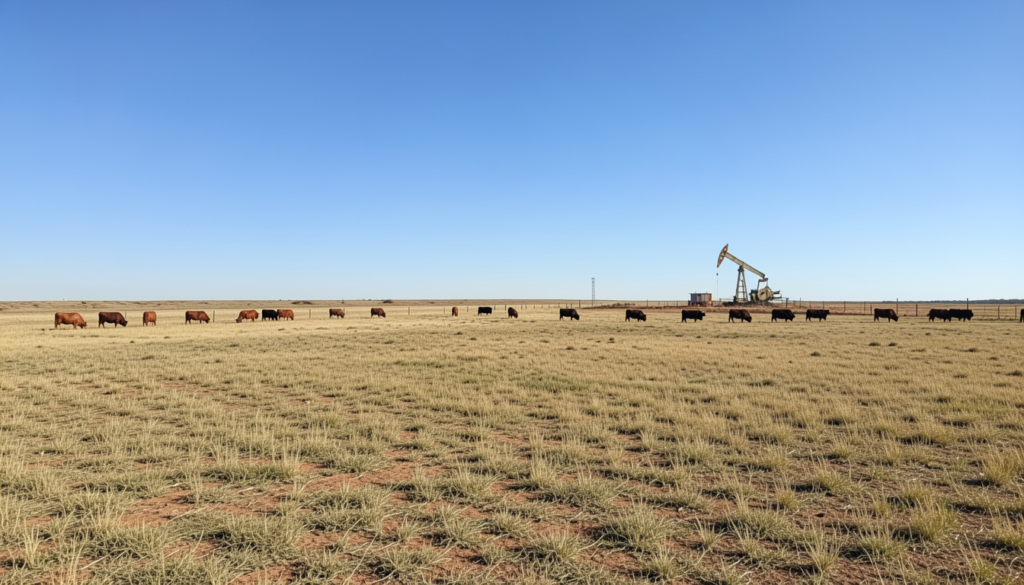
Oklahoma sits on top of serious oil and gas reserves. The SCOOP and STACK plays (South Central Oklahoma Oil Province and Sooner Trend Anadarko Basin Canadian and Kingfisher counties) have made mineral rights incredibly valuable in places like Kingfisher, Canadian, Grady, and Stephens counties.
But here’s what most listings won’t tell you.
Scenario one: Intact rights. The seller owns 100% of the minerals and transfers them to you. If an energy company leases those rights, you get royalty checks. That’s the dream scenario you see advertised.
Scenario two: Partially severed rights. A previous owner sold the minerals to someone else decades ago. The current seller only owns 25% of the mineral estate. You’ll get only 25% of any future royalties, if the other 75% can be tracked down (often impossible).
Scenario three: Completely severed rights. No minerals included. The deed says “surface only.” That 40 acres might still have oil under it, but you’ll never see a penny from production.
I helped a buyer in Hughes County who thought he was getting full mineral rights on 80 acres. The title search revealed a 1952 conveyance to Gulf Oil that had never been extinguished. He owned the surface. Period. The seller genuinely didn’t know—but ignorance doesn’t put oil royalties in your pocket.
How to Verify Mineral Rights on Owner Financed Land
Before you make your first payment, do three things.
1. Run a Title Search at the County Clerk’s Office
Every Oklahoma county has a clerk’s office with recorded deeds going back generations. You or a title company can trace chain of title from the original land grant or patent to the current seller.
Look for:
- Mineral deeds – documents that specifically transfer mineral interests
- Reservations – language like “reserving all minerals” when the original owner sold the surface
- Partial assignments – where someone sold 1/8th or 1/16th of their mineral interest to another party
Expect to pay $200–500 for a professional title search on 40–160 acres. Worth every penny.
2. Check the Oklahoma Corporation Commission Records
The OCC keeps records of every oil and gas well in the state, including:
- Who holds the lease
- Who signed the lease
- Who receives royalty payments
If a well exists on or near the property and your seller isn’t in those records, they probably don’t own the minerals under their own land.
3. Ask the Seller Directly (and Get It in Writing)
Simple questions reveal a lot:
“Do you have an abstract or title opinion showing you own 100% of the mineral rights?”
“Have you ever leased these minerals to an oil or gas company?”
*“Are you aware of any prior conveyances or reservations affecting the mineral estate?””
A legitimate seller provides documentation. A shady seller deflects or claims “it’s all in the deed” without showing you the deed first.
Structuring the Owner Finance Contract
You’re not just buying land. You’re creating a legal payment agreement that will govern your relationship for years.
Here’s what a solid Oklahoma owner finance contract includes:
Purchase price and down payment – Typically 5–20% down. Lower down payments usually mean higher interest rates.
Interest rate – Fair market for private land contracts in Oklahoma ranges from 6–10% as of 2025. Above 12% without a good reason (poor credit, high-risk property) is predatory.
Amortization and balloon – Some contracts amortize over 15–30 years with a balloon at 5–7 years. That means you make payments like a mortgage, but the full remaining balance comes due early. Make sure you can refinance or pay that balloon.
Default terms – This is where bad contracts hide landmines. Some say you forfeit all payments and improvements if you miss one payment. Oklahoma law offers some protections, but the contract can still give sellers aggressive remedies.
Mineral rights clause – Should specifically state: “Seller conveys 100% of all oil, gas, and mineral rights owned by Seller, including any executive rights, royalty interests, and future production payments.”
Warranty deed at payoff – Not a quitclaim deed. A general warranty deed guarantees the seller actually owns what they sold you.
Pro tip: Have an Oklahoma real estate attorney review the contract before signing. Not a title company. Not a notary. An attorney who knows oil and gas law. Budget $500–1,000. That’s cheap insurance.
Realistic Scenarios: What Deals Actually Look Like
Let me give you three real situations I’ve seen play out.
Scenario A: The Good Deal
Forty acres in Coal County. No current production but historical wells nearby. Seller inherited the land from her father, owned it free and clear. She offered 10% down, 7% interest, 10-year term with no balloon. Title search showed full mineral ownership intact.
Buyer paid 40,000total(4,000 down, 436/month).Twoyearslater,anenergycompanyleasedtherightsfor500/acre bonus plus 1/5th royalty. Buyer pocketed 20,000upfrontleasebonusandnowgets300–500 monthly royalty checks on top of making land payments. Net cost of the land after royalties? Close to zero.
Scenario B: The Break-Even
Sixty acres in Pottawatomie County. Seller had partial mineral rights—only 50% ownership. He disclosed this upfront. Buyer paid $60,000 on owner finance at 8% interest. The other 50% mineral owner was an estate in Texas with no known heirs.
When an oil company leased the property, the buyer only received half the standard bonus. Still a decent return, but not the windfall he imagined. Lesson learned: partial rights are better than none, but understand the math.
Scenario C: The Hard Lesson
Twenty acres in Grady County. Seller advertised “mineral rights included.” Buyer signed a contract without title search. Four years of payments later, a drilling rig showed up on adjacent land. Buyer contacted the county—turns out the minerals were severed in 1978. Seller owned zero mineral interest.
The contract had a clause that said “seller conveys only such mineral rights as seller actually owns.” Buyer had no legal recourse. He owned the surface of a property with active drilling next door and collected nothing.
Common Mistakes Buyers Make
Skipping title work to save money. I understand wanting to keep costs down on a smaller land purchase. But paying 400foratitlesearchischeaperthanpaying40,000 for a property that doesn’t include what you thought it did.
Assuming “mineral rights” means all rights. It might mean only the seller’s fractional interest. It might mean only rights not previously leased. Read the exact language.
Not checking for existing leases. Even if you own the mineral rights, an existing oil and gas lease binds you until it expires. You can’t re-lease or renegotiate until that term ends.
Paying off the contract early without a release. Some sellers disappear after receiving final payment. Pay through an escrow service or get a signed release of lien immediately upon payoff.
Watch for “due on sale” clauses that trigger the full balance if you try to refinance with a bank later. Some seller contracts include this to prevent you from paying them off early. Negotiate it out.
When Owner Financed Land Makes Sense (and When It Doesn’t)
This structure shines for certain buyers:
- You have decent cash for a down payment but traditional lenders won’t touch raw land. Most banks won’t finance undeveloped acreage without a home on it. Owner financing fills that gap.
- You want mineral rights exposure without bank oversight. If you understand the risks and have done the title work, owner financing gets you in the game faster.
- You plan to hold long-term. The longer you hold, the more time for potential mineral development to emerge.
It’s a poor choice when:
- You can get a conventional land loan. Bank rates (6–8%) often beat seller rates (8–12%). Use owner financing as a backup, not a first choice.
- The seller won’t allow a title search before contract signing. Hard pass. Every time.
- You need mineral income to make the payments. Royalties are never guaranteed. If you can’t afford the land without them, you can’t afford the land.
Action Steps Before You Sign Anything
- Get the legal description and run it through the county assessor’s website. Confirm acreage matches the listing.
- Order a title search from an Oklahoma abstract company. Ask specifically for mineral ownership status.
- Draft or review the contract with an attorney who handles oil and gas transactions.
- Verify seller identity matches the recorded owner. Scammers have listed land they don’t own.
- Check for back taxes with the county treasurer. You may inherit unpaid property tax liability.
- Visit the property in person. Google Earth doesn’t show the flood debris or the hog damage or the easement across the back forty.
- Get everything in writing – including verbal promises about mineral rights.
The Bottom Line
Owner financed acreage with mineral rights in Oklahoma can put you in a strong position. You bypass banks, control property quickly, and position yourself for potential energy royalties. But the deal only works if the mineral rights actually exist and the contract protects you.
The sellers who rush you to sign without due diligence aren’t doing you a favor. They’re hiding something. The sellers who hand over abstracts, welcome a title search, and explain exactly what they own—those are the people you want to do business with.
Take your time. Pay for the search. Read every line of the contract. Oklahoma land isn’t going anywhere. But your money will if you don’t get this right.
This article provides general information and does not constitute legal advice. Real estate and mineral rights laws vary. Consult a qualified Oklahoma attorney before signing any owner finance agreement.